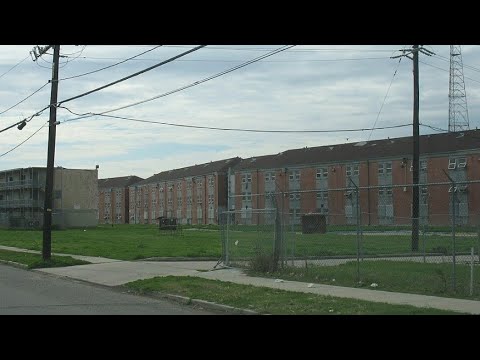
The William J. Fischer development, known to everyone as the Fischer Projects, opened in 1965 in Algiers, on the West Bank of the Mississippi River. It sat on about 48 acres near the foot of the Mississippi River Bridge, and it was the last of the big conventional public housing developments the city ever built.
Fischer had a look all its own. Alongside its low-rise buildings stood a tall high-rise tower that you could see from across the river and for miles around Algiers. That tower became a landmark, a symbol of the neighborhood that residents could point to and say, that is home.
Like the other developments, Fischer was built for working families who needed a decent, affordable place to live. It grew into a real community, with grandmothers watching the block, kids filling the courtyards, and neighbors who treated each other like family. Churches, corner stores, and schools nearby tied everyone together, and Algiers pride ran deep.
The West Bank has its own strong culture, and Fischer was part of it. Second lines rolled through the streets, social aid and pleasure clubs kept the traditions going, and music was always close by. Kids grew up around brass bands and Mardi Gras traditions, and the neighborhood produced hard-working people, athletes, and musicians who carried Algiers with them wherever they went.
Fischer also carried heavy history. In the early 1980s, after a police officer was killed near the development, the police response led to the deaths and beatings of residents and the federal case that became known as the Algiers 7. It was a painful chapter that the community never forgot, and it became part of the larger story of how the city treated its poorest neighborhoods.
During the drug era of the 1980s and 1990s, Fischer, like the other projects, saw violence and hard times, and the buildings were allowed to run down. The news often told only the worst stories. But the people who grew up there remember the cookouts, the ballgames, the block parties, and the family bonds far more than anything else.
On January 25, 2004, the Fischer high-rise was imploded, the first building in New Orleans ever brought down that way. Crowds gathered to watch the tower fall, and for many longtime residents it was an emotional moment, the end of a landmark that had defined their skyline for nearly forty years. The area has been redeveloped since then, and today none of the original low-rise buildings remain.
Being on the West Bank gave Fischer its own rhythm, a little apart from the rest of the city. Many residents crossed the river by ferry or over the bridge for work and school, and that gave Algiers a strong, self-reliant identity. Fischer was part of that, a community that took care of its own and did not wait on downtown to do it for them.
The people of Fischer built lasting bonds that outlived the buildings. Old neighbors still recognize each other on sight, and families that grew up in the projects still treat one another like kin. Through reunions, cookouts, and online groups, the Fischer family stays connected across Algiers, across the city, and across the country.
For the people who grew up under that tower, Fischer will always mean home. It means the West Bank, the ferry across the river, the courtyards, and the neighbors who became family. The implosion took the buildings, but it could not take the memories or the pride, and this page exists to make sure that history is never lost.
The tower is gone and the old buildings are gone, but Fischer is still a close Algiers community, and its people are still connected. This page is here to honor that history, to remember the families who called Fischer home, and to give them a place to reconnect, hold reunions, and pass the pride of Algiers and the West Bank on to the next generation.
William J. Fischer — Video History