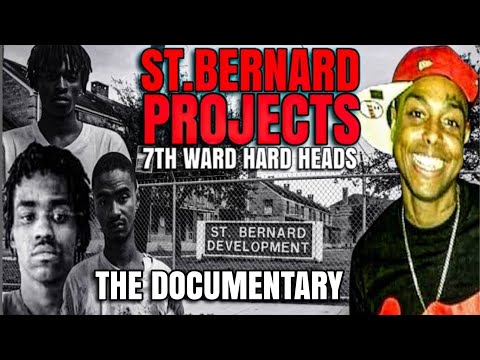
The St. Bernard opened in the early 1940s in the 7th Ward of New Orleans, and over time it grew into the second-largest housing development in the city. Rows of brick buildings spread across the neighborhood, home to thousands of families through the years. Like the other early projects, it was built to give working Black families a clean, affordable place to call their own.
But St. Bernard was never just apartments. It was one of the great cultural engines of New Orleans. The neighborhood played a foundational role in the birth of modern brass band music and, later, bounce, two sounds that have defined the city for more than fifty years. On any given day you might hear a young band practicing, a snare drum rolling down the street, or a crowd forming for a second line. Music was in the air, and it came straight out of these blocks.
Everyday life in St. Bernard was close and communal. Grandmothers watched the block from their porches, kids filled the courtyards until dark, and neighbors treated each other like family. People shared meals, shared rides, and showed up for one another at church, at funerals, and at celebrations. The 7th Ward pride ran deep, and folks repped St. Bernard with their whole chest.
Carnival was a season all its own. Mardi Gras Indians sewed their suits and paraded in the streets, social aid and pleasure clubs rolled their second lines, and the whole neighborhood came out to celebrate. These were not tourist attractions. They were simply how the community lived, passed down from the elders to the children year after year.
Like every large project, St. Bernard also went through hard years. During the drug era of the 1980s and 1990s, violence touched too many families, and the buildings were allowed to run down. The news often told only the worst stories. But the people who grew up there will tell you that was never the full picture. St. Bernard was cookouts and ballgames, church on Sunday, and a bond that money could not buy.
Hurricane Katrina in 2005 changed everything. The storm flooded the neighborhood, and instead of repairing the buildings, the city moved to close and tear them down. Residents who wanted to come home were largely kept out. By 2007 the old St. Bernard was gone. In its place the Housing Authority built a new mixed-income community called Columbia Parc, with modern apartments and townhomes spread across the same ground.
New name, new buildings, but the heart of the place did not disappear. The music that started in St. Bernard is still played all over the world. The families who came up there are scattered across the city and the country, but they stay connected through reunions, second lines, and social media groups that keep the memories alive.
Generations of the same families grew up in St. Bernard, and that continuity was its strength. Kids who played in the courtyards became parents raising their own children on the same blocks, watched over by the same elders. Schools, churches, and playgrounds tied everyone together, and the neighborhood produced teachers, coaches, ministers, and musicians who gave back to the community that raised them. Even people who moved away kept coming back for holidays, for second lines, and to check on the ones still there.
This page is here to honor that history. Ask anyone from the 7th Ward where they are from, and they will not say Columbia Parc. They will say St. Bernard, and they will say it with pride. The buildings came down, but the music, the culture, and the family bonds are still standing, and this is a place for the St. Bernard family to remember, reconnect, and pass the story on to the next generation.
St. Bernard — Video History