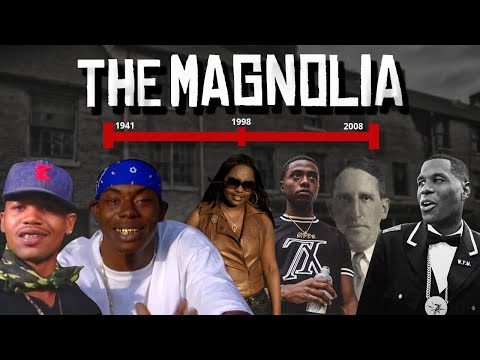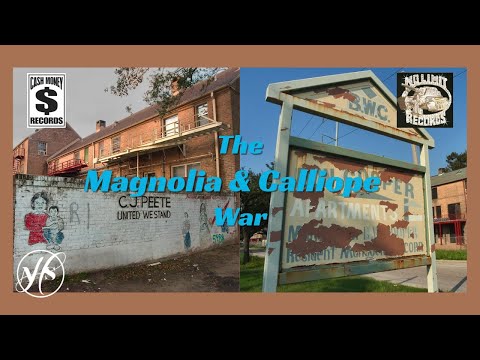
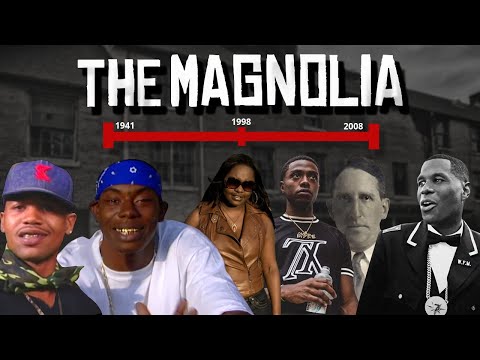
The Magnolia opened in 1941 in the Central City part of Uptown New Orleans. Most people never called it by its official name. To the city it was simply the Magnolia, or the Wild Magnolia, and later it carried the name C.J. Peete. However you said it, everyone knew what you meant.
The Magnolia holds a special place in American history. It was the first all-Black public housing development in the country paid for by the federal government. Work started in 1939 and took about two years to finish. The chief architect was Moise H. Goldstein, a New Orleans man trained at Tulane who also worked on buildings at Dillard University, the Audubon Zoo, and the old airport terminal. The first buildings were low brick rows, built in a simple, dignified style.
At its biggest the Magnolia had around 1,400 apartments and was home to roughly 2,100 people. A large addition in 1955 added more buildings to the original footprint, though the newer parts were put up with cheaper materials. For families moving out of run-down housing, the Magnolia offered something steady: a front door, a yard, and neighbors who looked out for one another.
Over the years the Magnolia became far more than a place to live. It was a home base for New Orleans music and culture. Musicians, athletes, and everyday leaders came out of those blocks, and the name spread far beyond the neighborhood. Kids grew up playing in the courtyards, families cooked and shared meals, and the community built its own traditions and pride.
Carnival ran deep there too. Mardi Gras Indians sewed their suits in those apartments, and on Mardi Gras morning the beadwork and feathers came out into the streets. Sunday second lines rolled through the neighborhood, and social aid and pleasure clubs kept the tradition strong. Ballgames, jump rope, and double-dutch filled the courtyards, while older folks watched over the younger ones from their steps. That everyday closeness is what people miss the most.
Like every large project, the Magnolia also saw hard times, especially during the drug years of the 1980s and 1990s, when violence touched many families. The news often told only the hardest stories. But the people who lived there will tell you the Magnolia was never only its worst days. It was block parties, church, school, and a bond that outlasted the buildings themselves.
By the late 2000s the city had decided the old buildings had to go. By late 2008 the Magnolia had been emptied and most of it torn down. On January 7, 2009, local, state, and federal officials broke ground on a new mixed-income community built to replace it. That new community is called Harmony Oaks, and it stands on the same ground today, with modern homes for both lower-income residents and market-rate renters.
The Magnolia was proud of its Third Ward roots. The nearby basketball courts and schoolyards turned out players who went on to college and pro careers, and the whole neighborhood cheered them like family. Whether it was a championship game, a talent show, a jazz funeral, or a Sunday cookout, the Magnolia always found a reason to come together, and that spirit is exactly what its people carried with them when the buildings finally came down.
The name on the map may have changed, but the memory has not. Ask anyone who came up there, and they will not say Harmony Oaks. They will say the Magnolia. The buildings are gone, but the history, the music, and the family bonds that grew there are still a real part of who New Orleans is. Today former residents still hold reunions, share old photos, and keep the name alive so their children and grandchildren know exactly where they come from.
Magnolia (C.J. Peete) — Video History