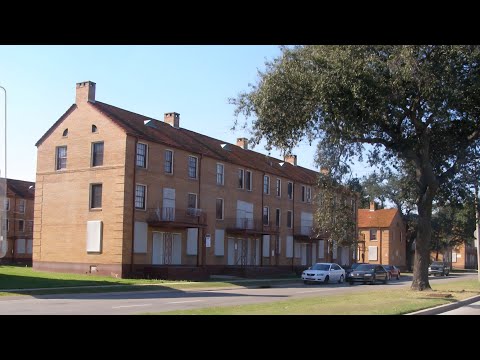
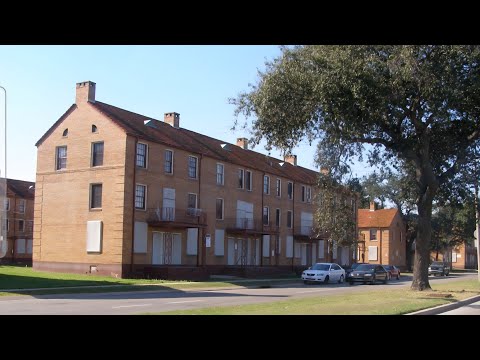
Lafitte opened in August 1941 in the 6th Ward, right in the heart of historic Tremé, one of the oldest Black neighborhoods in America. It was one of the very first public housing communities built for Black families in Louisiana, and from the start it was tied to the culture around it.
The development had 896 apartments and was home to about 3,000 people. Its low brick buildings and iron balconies sat just a short walk from Claiborne Avenue, under the oak trees that once lined the neutral ground before the interstate was built overhead. Living in Lafitte meant living inside the beating heart of Tremé, steps from the churches, bars, and corners where so much New Orleans music was born.
Lafitte and Tremé raised generations of musicians and culture bearers. Brass bands, second lines, and Mardi Gras traditions were part of everyday life. Kids grew up marching behind the bands, and the sound of a tuba or a snare drum on a Sunday afternoon was as normal as the church bells. Jazz funerals passed down these streets, turning grief into music and celebration. The community was tight, and neighbors treated each other like family.
Everyday life in Lafitte was porches and stoops, red beans on Monday, kids playing in the courtyards, and grown folks keeping watch over the whole block. People did not have much, but they shared what they had. The traditions that outsiders now travel to New Orleans to see, the second lines and the brass bands, were simply part of growing up here.
Like every large development, Lafitte went through hard years, especially during the drug era, and the buildings were allowed to fall into disrepair. Still, the people held on to their traditions and their pride. After Hurricane Katrina in 2005, the storm did not destroy Lafitte, but the buildings were kept locked and empty anyway, and residents were not allowed to return. Many families were scattered across the country and never made it back. In 2008 the old Lafitte was torn down.
In its place the city built a new mixed-income community called Faubourg Lafitte, with modern homes and a promise to bring back a real neighborhood. The nearby Lafitte Greenway, a walking and biking path, now runs along the old rail corridor beside it. Today those new buildings stand where the old bricks once were, in the same historic corner of Tremé.
Tremé itself is sacred ground. Just blocks away sit Congo Square, where enslaved Africans once gathered to drum and dance on Sundays, and St. Augustine Church, one of the oldest Black Catholic parishes in the country. Growing up in Lafitte meant growing up surrounded by that history, and the people carried it with pride. Community groups, churches, and social aid and pleasure clubs held the neighborhood together through good times and hard ones.
Elders passed the traditions down, and young people picked them up and carried them forward, keeping the culture alive even after the buildings were gone. Today, former residents stay connected through reunions and online groups, sharing photos and memories so the story of Lafitte is never forgotten and the next generation always knows where they come from.
The buildings changed, but the roots run deep. The families of Lafitte are still part of Tremé, still part of the music, and still connected to one another. This page is here to keep that history alive, to honor the people who called Lafitte home, and to give them a place to remember, reconnect, and celebrate reunions for years to come. Even now, decades after the last brick came down, the pull of Tremé remains strong, and the children and grandchildren of Lafitte still gather to honor where the family began.
Lafitte — Video History