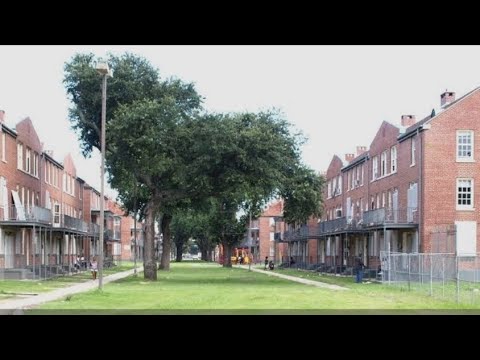
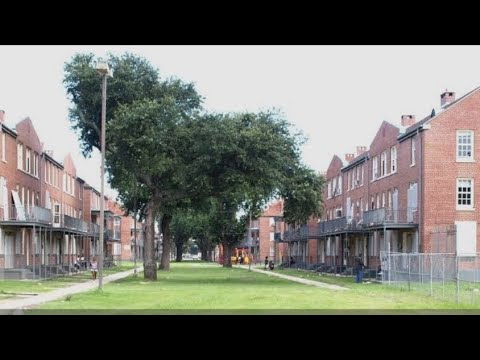
Iberville opened in 1941, right at the edge of the French Quarter, on land with one of the most famous histories in the city. Before the project was built, this was Storyville, the old district where jazz took shape in the early 1900s. When Storyville closed, the buildings were cleared, and in their place the city put up the Iberville, one of its earliest public housing developments.
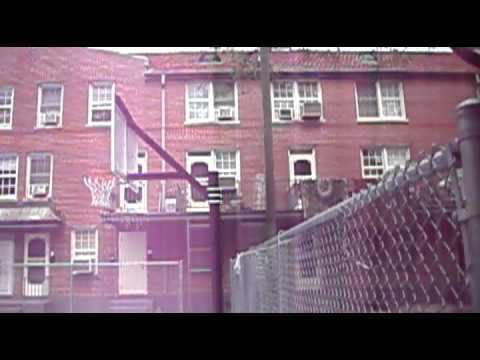
The development sat on about 23 acres, with long rows of red-brick, three-story buildings. It was built under the 1937 Housing Act, part of a national push to give working families safe, affordable homes. For decades Iberville anchored the downtown edge of Tremé, just steps from Basin Street, Canal Street, and the Quarter.
Because of where it stood, Iberville was woven into the daily rhythm of the city. Residents were a short walk from downtown jobs, from the churches and corner stores of Tremé, and from the parades and second lines that rolled through the neighborhood. Kids grew up in the courtyards, families knew one another block by block, and the elders kept watch over everybody.
Iberville had a strong culture of its own. Brass bands and social aid and pleasure clubs were part of life, and the neighborhood carried the same music and Carnival traditions that make New Orleans what it is. People took pride in being from Iberville, and that pride has never faded, even after the buildings came down.
Like the other big projects, Iberville faced hard years, especially during the drug era, when violence and neglect took a toll. The buildings aged, and the city let them run down. Still, the community held on to its traditions and its sense of family, and generations of children grew up there with deep roots.
In 2011 the Housing Authority won a federal Choice Neighborhoods grant to rebuild Iberville. Demolition of the old buildings began in September 2013, and the site was slowly transformed into a new mixed-income community called Bienville Basin. A few of the historic buildings were saved and restored, tying the new development back to its long past.
Today Bienville Basin stands where Iberville once did, in the same historic corner between Tremé and the French Quarter. The name on the map is new, but the ground underneath holds layers of New Orleans history, from Storyville to Iberville to now.
Location gave Iberville a front-row seat to the life of New Orleans. On a normal day, residents could hear the streetcars on Canal, the bells of the churches, and the horns of a passing brass band. Tourists filled the Quarter a block away, but Iberville was a real neighborhood, with its own corner stores, barrooms, and gathering spots where people knew each other by name.
The families of Iberville were tight, and they looked out for one another. Grandmothers cooked for whole hallways, men fixed cars and shared what they knew, and older kids kept an eye on the younger ones. Money was often short, but nobody went hungry if a neighbor could help. That everyday kindness, more than any building, is what people remember when they talk about the old Iberville.
When people who grew up in Iberville talk about it today, they do not mention the hard times first. They talk about the neighbors, the cooking, the music, and the feeling that everyone on the block was family. That feeling is what they carry with them, and what they pass down to their children and grandchildren.
This page is here to keep that story alive. The families of Iberville are still part of Tremé and still connected to one another. The buildings changed, but the memories, the music, and the pride remain. This is a place for the Iberville family to remember, reconnect, hold reunions, and make sure the next generation knows exactly where they come from.
Iberville — Video History