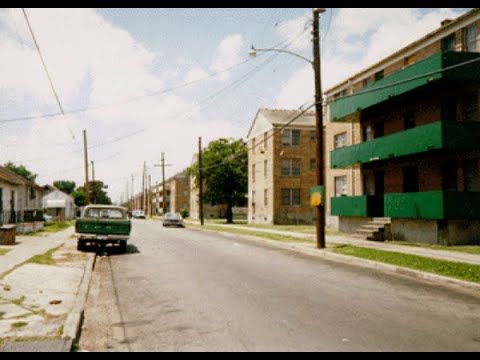
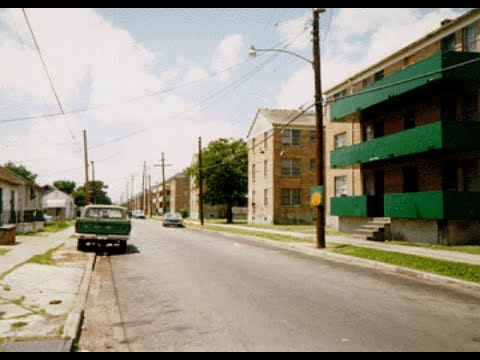
Florida opened in 1946 in the Upper 9th Ward, on an 18.5-acre tract bounded by Florida Avenue and North Dorgenois Street. It had 47 two- and three-story brick buildings, 734 apartments, and close to 1,300 residents. It stood just across Florida Avenue from the Desire development, and the two neighborhoods grew up side by side, so close that people often spoke of them in the same breath.
Like the other projects, Florida was built to give working Black families a safe, affordable place to live. It came a few years after the first wave of developments, part of the city’s postwar push to provide public housing. The brick buildings and shared courtyards became home to thousands of people over the decades that followed.
Life in Florida was tight and neighborly. Grandmothers watched the whole block, kids played in the courtyards until the streetlights came on, and everybody knew everybody. Families shared meals and looked out for one another, and the churches, corner stores, and schools nearby tied the community together. Money was often short, but the sense of belonging was strong.
The Upper 9th Ward carried a deep culture, and Florida was part of it. Second lines rolled through the streets, social aid and pleasure clubs kept the traditions alive, and music was always close by. Kids grew up around brass bands and Mardi Gras traditions, and those roots stayed with them for life. The neighborhood produced hard-working people, ballplayers, musicians, and leaders who never forgot where they came from.
Because it sat next to Desire, Florida shared in both the good and the hard. The far downtown edge of the city did not always get the investment other neighborhoods received, and during the drug era of the 1980s and 1990s the buildings suffered from violence and neglect. The news often told only the worst stories, but the people who grew up there remember the block parties, the cookouts, and the family bonds more than anything else.
Over time the buildings aged badly, and the city decided to rebuild. Florida was closed and cleared in the early 2000s. In its place a new mixed-income community was later built, known today as New Florida, with modern homes on the same ground where the old brick buildings once stood.
The name on the map changed, but the memory did not. For the people who came up in Florida, it will always be Florida, a real neighborhood on the edge of the 9th Ward where families raised families and neighbors were kin. Many of those families are spread across the city and the country now, but they stay connected through reunions, second lines, and social media groups that keep the history alive.
The 9th Ward has always had a strong identity, and Florida shared in it. People from Florida and Desire grew up together, went to the same schools, played on the same teams, and knew each other for life. That closeness created a real extended family that stretched across both developments and lasted long after either one was standing.
Hurricane Katrina in 2005 hit the 9th Ward especially hard, and the floodwaters scattered many Florida families across the country. Some never made it back to New Orleans. But the bonds held. Through phone calls, holidays, and reunions, the people of Florida stayed a family no matter how far apart the storm pushed them.
This page is here to honor that story. The buildings are gone, but the pride of Florida and the downtown 9th Ward still stands. This is a place for the Florida family to remember, reconnect, hold reunions, and make sure the next generation knows exactly where they come from.
Florida — Video History